
The Global issues are relevant topics in IB English HL & SL. In this topic, students learn about problems that affect people globally and need to be resolved. These problems affect societies worldwide. Here is a deep dive with our IB English Tutors.
What Are Global Issues in IB English?
The IB has included Global Issues in its curriculum to give students a sense of global responsibility. The curriculum provides students with a transnational perspective, allowing them to analyze and understand global issues through literature.
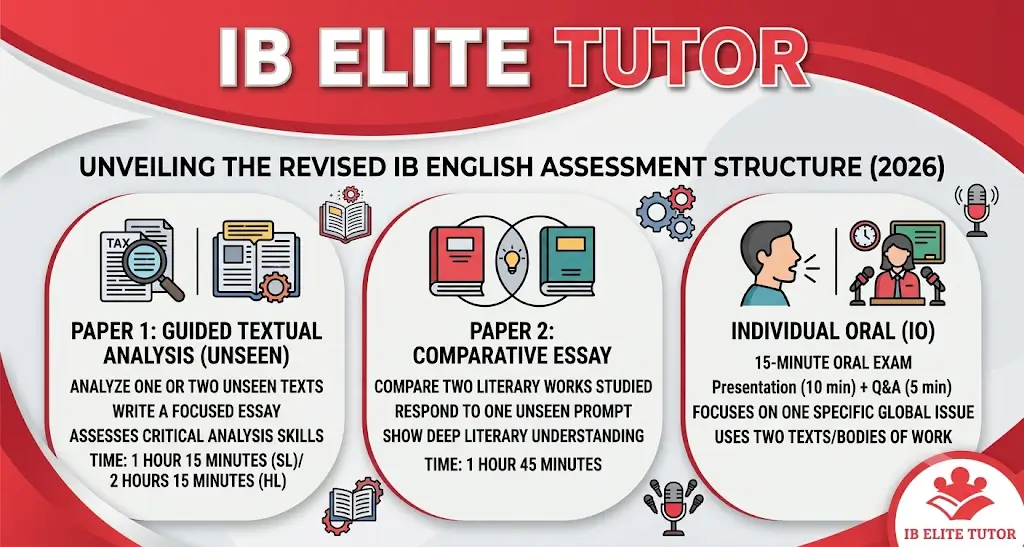
IB Exam Pattern: The IB English examination includes two papers. Papers 1 and 2. In Paper 1, students analyze unseen texts under exam conditions. While in Paper 2, students write an essay comparing two literary works they studied in class. In addition to these two papers, there is one English Individual Oral exam.
For the Individual Oral (IO), students prepare a 10-minute presentation analyzing one Global Issue across two different texts. After the presentation, the classroom teacher asks questions for 5 minutes to deepen the discussion. HL students’ work is deeper and more complex than SL students’. HL students write an additional 1,200- to 1,500-word HL Essay on one text studied during the course.
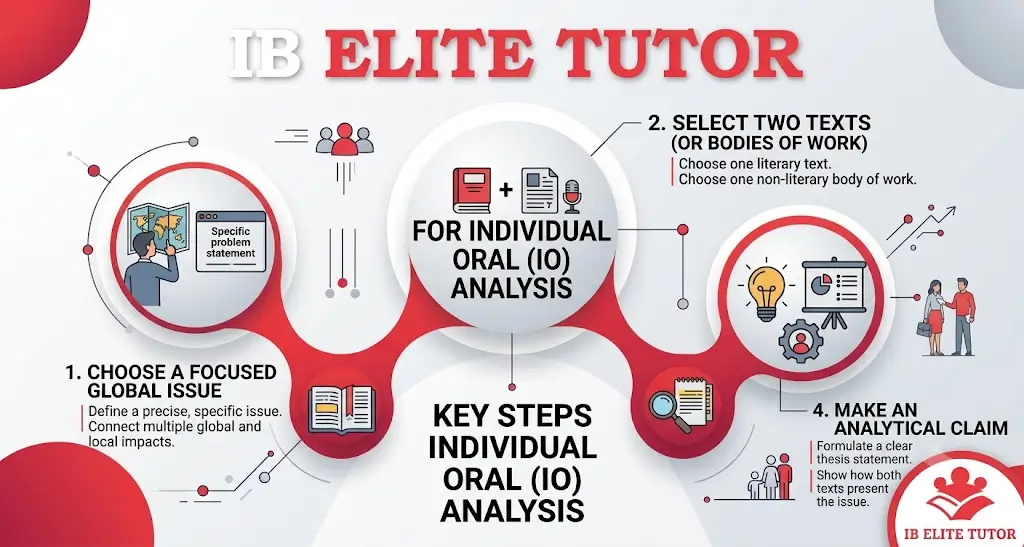
Common Global Issues IB English HL & SL
The IB categorizes Global Issues into five Fields of Inquiry, such as
| Politics |
| Power |
| Justice |
| Science |
| Environment and Technology |
| and Technology |
Things to Remember While Choosing a Global Issue
Students should choose a topic by considering a few important points. Here are a few suggestions from our IB English Online Tutors to help:
- Significant on a wide scale: you should never forget that the topic you choose should be a problem for many people. You cannot select a topic related to a limited population of a particular area. It should cover a wide range. You should check whether the problem has affected many people or is limited to a few. A valid Global Issue must meet the following three IB criteria:
- Depth: You should remember that the topic you have chosen should provide detailed information. Collect in-depth knowledge about the topic. Gather information about the topic you chose so you can support your points with strong evidence.
- Embedded Arguments: You should give sound arguments to prove how the problem affects a larger world population. You can use examples to prove your points.
- Complex but not convoluted: Make sure your topic is complex, but not so confusing that it hurts your presentation. Cause and effect and relationship: You should also discuss the root causes of the problem and its effects on the population and the environment.
- Significant on a wide scale: you should never forget that the topic you choose should be a problem for many people. You cannot select a topic related to a limited population of a particular area. It should cover a wide range. You should check whether the problem has affected many people or is limited to a few. A valid Global Issue must meet the following three IB criteria:
1. It has wide-reaching impact.
2. It crosses national borders
3. and affects local everyday life.
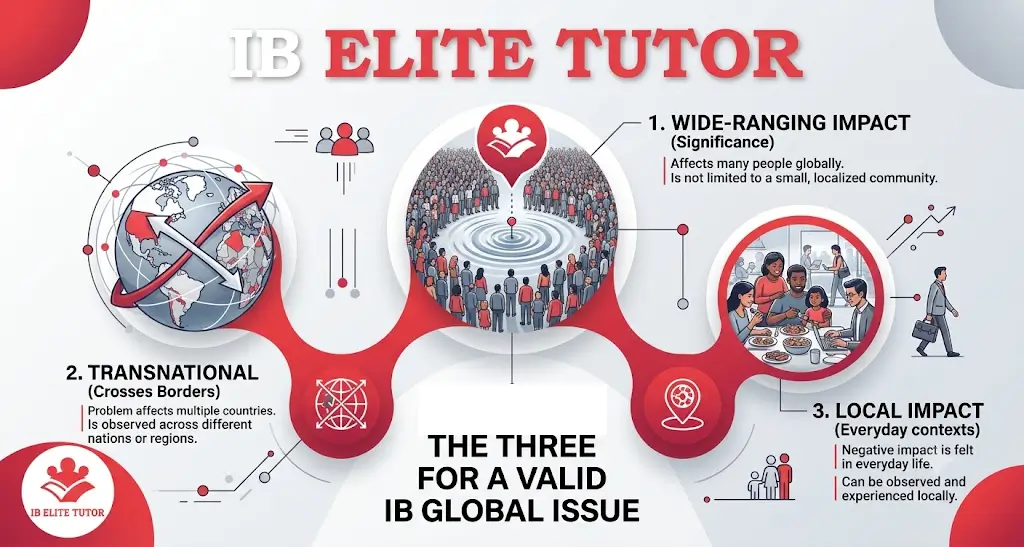
- Transnational: Global issues should affect many countries. For example, global warming affects many countries. Remember that the problem should not be limited to one country only.
- Impact felt in everyday contexts: You should observe that the Global issue you are choosing negatively impacts people’s everyday lives.
Analyzing Texts Through the Lens of Global Issues
Analyze the text in IB Global Issues very carefully. For this, go through the text carefully and find all the literary devices used in the particular text. Try to simplify the vocabulary used in the text and make an analysis with specific evidence. You should also properly consider the author’s tone, theme, characters, and style. The text also impacts the reader, so an impact analysis can be made from different perspectives. Here are a few essential things you should remember while analyzing the text in IB English.
Make a list of texts studied: You should list texts you have already studied and note the global issues you have observed in those texts. You should note the literary devices, phrases, and other important details about the text.
Look for Connections Between Texts:
You can also compare different texts and how authors reflected the same problem with different perspectives.
- Start with the text you enjoy: You must have deep interest in it, so choose a story and author you like the most.
- Choose a Theme: It is also essential to know the story’s central idea or theme that the poet or author wants to convey a message
- Try to find out the literary techniques: You should also try to find out the language and structure of the text. Observe the development of characters and what type of perspective they were reflecting. Try to explain the author’s aim in writing the story about that particular issue. Literary devices include:
1. Imagery
2. Metaphor
3. Symbolism
4. The author’s tone, mood, and style
5. Personification and other figure of speech
Ask Questions to Yourself About the Global Issues
You can also ask yourself a few questions after reading the whole text. You can ask questions like how this particular text illustrated the problem and the impact of this issue on society. What are the reasons behind that specific problem?
Global issues in IB English have a good weightage, and students have opportunities to use their analytical skills to learn about global issues. This helps students develop an understanding of the world’s problems and also develops a critical thinking approach. They also learn how to analyze a book.
IB Elite Tutor is a decade-old academy. We have a team of highly skilled IB Online Tutors who can help you choose and analyze Global Issues topics in IB English HL and SL. Book a free introductory IB English Tuition class and start your academic journey with us.